How to Start a Career in Performance Marketing: A Practical Guide for Beginners
Want to start a career in performance marketing? Learn the key skills, a 90-day plan, how to get experience without a job, and how to grow fast. From a PPC manager handling 40+ ad accounts.
By Prince PandeyPublished 6 min read
In this article
If you want to start a career in performance marketing, you don't need a marketing degree or ten certificates. You need the right skills, real hands-on practice, and a clear plan.
I'm Prince Pandey, a performance marketer with 3.5 years of agency-side PPC experience. I manage 40+ ad accounts across Google, Meta, LinkedIn and TikTok for clients in Australia, the UK, the US and India. I was promoted from PPC Executive to Account Manager within three months of joining.
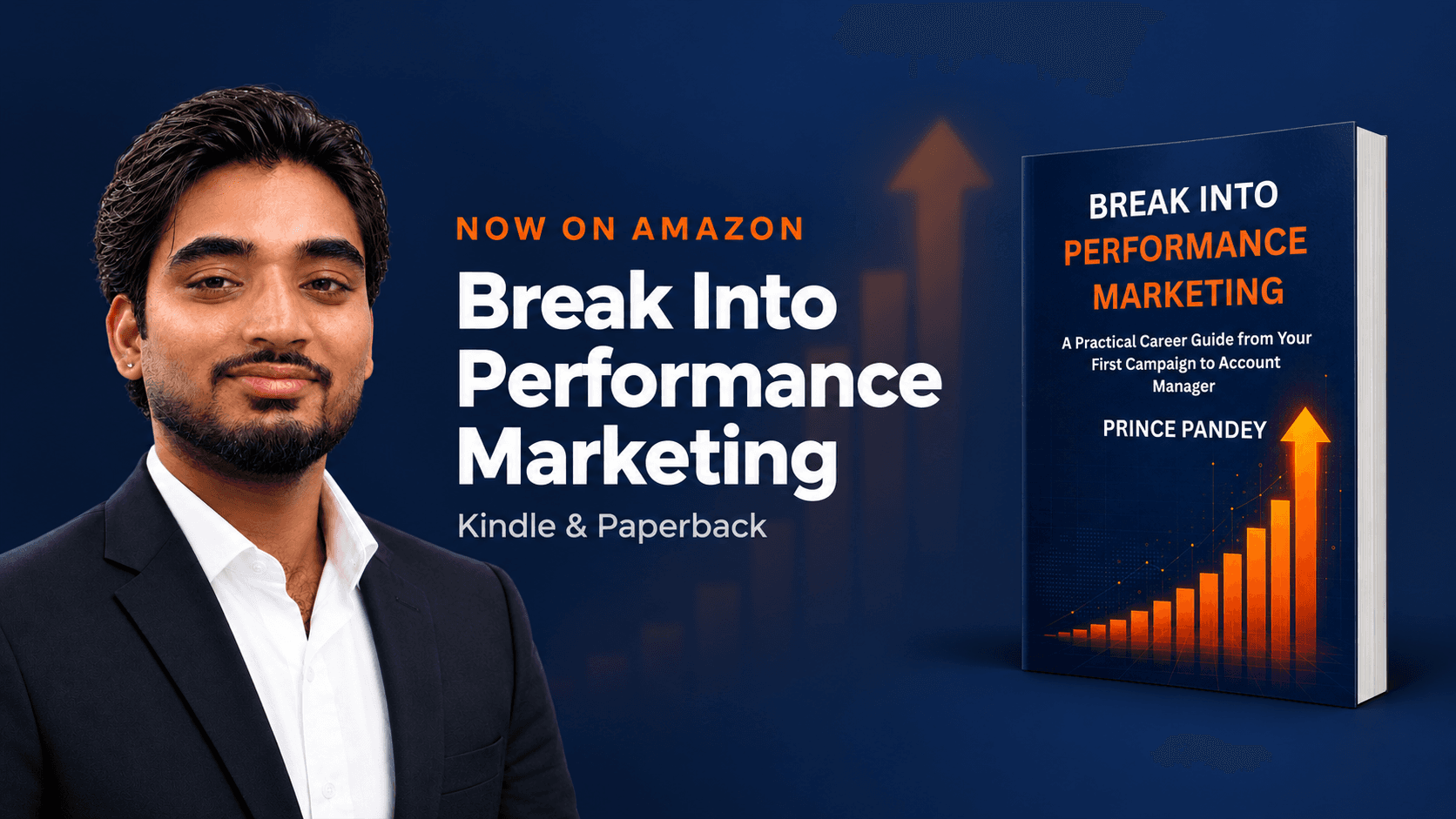
This guide gives you the short roadmap. My book, Break Into Performance Marketing, gives you the full one.
What Is Performance Marketing?
Performance marketing is digital advertising where you pay for measurable results like clicks, leads, sales or app installs.
Traditional advertising asks, "Did people see our brand?" Performance marketing asks, "How many customers did we get, and what did each one cost?"
Most of the work happens on:
Google Ads: Search, Shopping, Performance Max and YouTube
Meta Ads: Facebook and Instagram
LinkedIn Ads: B2B targeting by job title, company and industry
TikTok Ads: Short video and younger audiences
Is Performance Marketing a Good Career?
Yes, especially if you like numbers and solving problems.
Steady demand: Every business running ads needs someone to make them profitable
Visible results: Your impact shows up in numbers, which makes raises easier to justify
Remote-friendly: You can work with clients anywhere in the world
Fast growth: Strong learners can move up in months, not years
Freelance option: Once you're good, you can sell the skill directly
The honest downside: it can be stressful. Budgets are real money and clients get nervous when numbers dip.
Skills You Need to Become a Performance Marketer
Hard skills
One ad platform, learned deeply. Google Ads or Meta Ads is the best place to start
Conversion tracking. GA4, Google Tag Manager, pixels and UTM parameters
Spreadsheets. Pivot tables, lookups and basic charts
Ad copywriting. Short, clear, benefit-first headlines
Landing page judgment. Spotting why a page won't convert
Soft skills
Explaining results in plain language
Treating the client's budget like your own money
Curiosity to find the real cause of a problem
Staying calm when performance drops
What to ignore for now
Collecting certificates before running a single campaign
Learning every platform at once
Chasing "growth hacks" instead of fundamentals
A 90-Day Plan to Start Your Performance Marketing Career
Days 1 to 30: Foundations
Pick one platform and complete its free official training
Learn CTR, CPC, conversion rate, CPA and ROAS until you can explain them without notes
Understand how campaigns, ad groups and ads are structured
Days 31 to 60: Tracking and data
Set up a free GA4 property and a test conversion in Google Tag Manager
Learn UTM parameters
Build a simple weekly performance report in Google Sheets
Days 61 to 90: Real practice
Run a small campaign with a tiny budget
Write your first case study
Start applying for roles
How to Get Performance Marketing Experience Without a Job
You need experience to get a job, and a job to get experience. Here's how to break that loop:
Run ads for a local business. A shop, clinic, gym or salon. They pay the ad budget, you do the work
Build your own project. A small website or store you can run ads to
Help a nonprofit or family business. Many have no one managing their ads
Audit ads you can see. Study competitors in the Meta Ad Library and write short teardowns
Turn each one into a case study: the goal, the problem, what you did, and before-and-after numbers.
How to Land Your First Performance Marketing Job
Start at an agency if you can. You'll see more accounts in one year than an in-house role shows you in three
Keep your resume to one page. Use numbers, not vague claims
Use LinkedIn properly. A clear headline and case studies in your Featured section
In interviews, think out loud. Walk through the funnel: impressions, CTR, conversion rate, CPA
Weak resume line: "Handled Google Ads campaigns."
Strong resume line: "Cut cost per lead by 30% in six weeks by adding negative keywords and rewriting ads."
How to Grow Fast Once You're In
Check your accounts daily
Report problems early, with a proposed fix
Keep a change log so you know why results moved
Own outcomes, not tasks
Keep a document of your wins with numbers for review time
That's how I went from PPC Executive to Account Manager in three months.
Break Into Performance Marketing: The Full Guide
Break Into Performance Marketing: A Practical Career Guide from Your First Campaign to Account Manager is a short, practical book for anyone starting out in paid media.
Inside the book:
What performance marketing really is, without the jargon
The skills that matter and the ones you can skip
The complete 90-day learning plan
How to build a portfolio and write case studies
Interview preparation, including 20 practice questions
How to survive your first year and get promoted fast
Freelancing and working with international clients
A 30-day starter checklist and a glossary of ad terms
Who it's for: students, fresh graduates, career switchers, junior executives and freelancers adding paid ads as a service.
Get it on Amazon (Kindle and Paperback):
Frequently Asked Questions
How do I start a career in performance marketing with no experience?
Learn one ad platform, understand conversion tracking, run a small real campaign for a local business or your own project, and turn the results into a case study.
How long does it take to learn performance marketing?
With one to two hours of practice a day, you can learn the basics and run your first campaign in about 90 days.
Which platform should a beginner learn first?
Google Ads is a strong first choice because search intent makes results easier to understand. Meta Ads is a good second platform.
Do I need a degree to become a performance marketer?
No. Employers care more about hands-on skills, tracking knowledge and case studies with real numbers.
Who wrote Break Into Performance Marketing?
Prince Pandey, a performance marketer and Key Account Manager who manages 40+ ad accounts across Google, Meta, LinkedIn and TikTok.
About the Author
Prince Pandey is a performance marketer based in India with 3.5 years of agency-side PPC experience. He is a Key Account Manager at WTechy Pvt Ltd, manages 40+ ad accounts across Google, Meta, LinkedIn and TikTok, leads a team of four, and takes on freelance work under The Marketing Freak.
About the author

Performance Marketer
Performance Marketer | SEO & PPC Specialist | Expert in Meta Ads, Amazon Ads, and WA Marketing | Helping Businesses Maximizing Online Visibility